Museumsufer
SNF
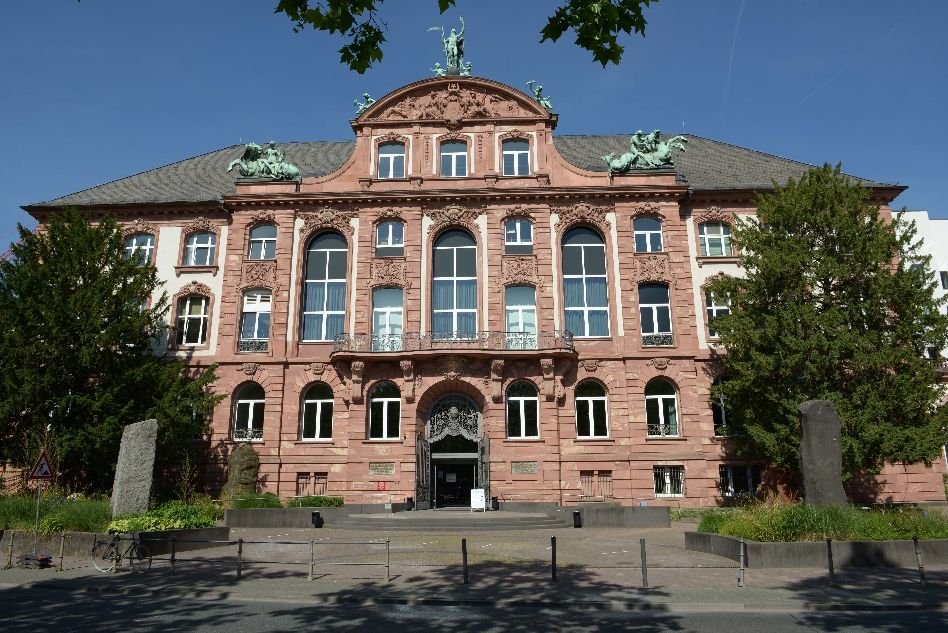
Senckenberg Naturmuseum
The Senckenberg Nature Museum is one of the largest natural history museums in Europe.
Current exhibitions (1)
Events – Next 30 days (17)
In Search of the Philosopher's Stone – Secrets of Alchemy
2026-10-28 @ 18:00
with Dr. Gesa Poetzsch As Halloween approaches, science and magic seem to merge at the museum. Is gold glowing in the crucible, or is something more sinister hidden within the smoke and flames? In alchemy, the world consisted of more than just fire, water, air, and earth. Sulfur, mercury, and lead held secrets and the promise of complete transformation. Join us this evening as we step into the legendary alchemical laboratory and experience how the boundary between…
Details →Maria S. Merian – Pioneer in Insect Research
2026-10-28 @ 19:30
Born in 1647, Maria Sibylla Merian was a leading figure in the field of natural history and the dissemination of scientific knowledge. Even as a teenager in her hometown of Frankfurt am Main, she was engaged in the study of insects, specifically silkworms she had raised herself. She was the first female researcher to systematically observe insects, document their diet and way of life, and describe their metamorphosis, which had been largely unknown until then. Due to her many years of…
Details →Member tour: Inside Malacology - the mollusc collection
2026-10-29 @ 18:00
Malacology is the science of molluscs, which include snails, mussels and squid. These in turn are part of the invertebrates and, with a staggering 130,000 living species, form the second largest animal phylum on earth after the arthropods. The mollusc collection in our Department of Marine Zoology in Frankfurt is correspondingly species-rich and extensive. We invite our members to discover this extraordinary biodiversity.
Details →Halloween Special: At night in the Senckenberg Museum
2026-10-30 @ 22:00
Sweets ... and dinosaurs! Once a year, fantastic creatures take over the museum - it's haunted and creepy everywhere. Our guides will lead you in mixed group tours with flashlights through the eerily decorated museum: Where did creepy creatures such as vampires and werewolves originate? Which monsters do we encounter in the sea? This flashlight tour can and may be spooky, participants should be able to distinguish between play and reality. Participation is limited to...
Details →Secret Service: Women in Natural Sciences
2026-11-04 @ 18:00
with exhibition curator Maike Schlegel The special exhibition “Secret Service: Women in Natural History” highlights the diverse contributions of various women throughout history to the field of natural history. Some of them worked at the Senckenberg Society and helped ensure that the Natural History Museum can display such a wealth of artifacts today. Curator Maike Schlegel provides insights into the background of the exhibition’s design and the research project of the same name being conducted at the museum. Let’s go…
Details →Senckenberg highlights
2026-11-08 @ 11:00
From fascinating marine habitats to biodiversity at high altitudes, from a glimpse into the past to exciting questions about the future: Our “Highlights” tour offers many interesting, entertaining, and perhaps even surprising stories and background information on selected exhibits such as the T. rex, fin whale, anaconda, and others. Please note: Accessibility cannot be guaranteed everywhere.
Details →The Sapiens Clan—What Has Happened So Far
2026-11-11 @ 18:00
with Daniela Szymanski Paleoanthropology is a fascinating field, and new research findings about our ancestors are constantly emerging. In a brief tour through the “family album” of humankind at the museum, we’ll explore some of these research findings. We’d also like to use this as a thematic introduction to the Koenigswald Lecture taking place that same evening. This lecture is held annually in honor of Gustav Heinrich Ralph von Koenigswald (*Nov. 13, 1902 – ꝉJuly 10, 1982), the founder…
Details →Exploring the Contexts of Homo floresiensis and Modern Humans at Liang Bua, Flores, Indonesia
2026-11-11 @ 19:30
Liang Bua, the site where Homo floresiensis was discovered, is a limestone cave on the Indonesian island of Flores. Its history spans from about 190,000 years ago to the present day and provides a long-term overview of the activities of early humans and their environment. New analyses of the site suggest that Homo floresiensis existed until about 50,000 years ago. Dr. Thomas Sutikna is co-director of the excavations in Flores, and in his lecture he will provide insights into…
Details →Secret Service: Stories from the Archives
2026-11-11 @ 19:30
Traces of women can be found throughout the archives of the Senckenberg Society for Natural History: in photographs, field notes, letters, and working documents. And yet their names are often missing from the official histories of science. This lecture takes you on a journey behind the scenes of natural history research. You’ll meet women who preserved collections, facilitated research, and developed their own scientific areas of focus—even when their work was barely visible…
Details →Forum "Researching together"
2026-11-13 @ 14:00
Always keeping an eye on nature - helping to research, observe, measure, sort and map everything from the very small to the very large - in one of the many Citizen Science projects or as a volunteer. Would you like to join us? Counting jaguars, deciphering tiny signs in old German script, maintaining and digitizing collection items - there is a lot to do in science, and we can't do everything on our own. That's why we are once again inviting you to the Senckenberg Forum on Friday, November 13...
Details →Our Senses on a Journey of Discovery—The World Inside Our Heads
2026-11-14 @ 14:00
with Dr. Anya Dietrich, Cooperative Brain Imaging Center Frankfurt (CoBIC), MEG Lab Why can our senses deceive us? How does the image of the world form in our minds? And do we all experience the same reality? Together with Dr. Anya Dietrich, we’ll embark on a journey of discovery through the fascinating world of our brain. Through exciting experiments and astonishing optical illusions, you’ll discover how our brain uses colors, sounds, and touch to create our picture of the world…
Details →But the room just filled up with mosquitoes – on the 10th anniversary of Leonard Cohen's death
2026-11-18 @ 18:00
with Dr. Sebastian Lotzkat Leonard Norman Cohen was born in Montreal in 1934; he began writing poetry in 1956 and started setting his works to music in 1967. He immediately formed a dark, often downright Kafkaesque counterpoint to the life-affirming attitude of the hippies. Although his mostly somber poetry often seems to draw inspiration from urban life, his eloquent imagery repeatedly draws on a wide variety of motifs from nature. Today we pay tribute to the grand master, who on the 7th…
Details →
Rhein-Main Documentary Nights: Plastic Fantastic
2026-11-19 @ 18:00
There are 500 times more plastic particles in the oceans than stars in our galaxy. Plastic is in the rivers and seas, in our air, in the soil and even in our own bodies. What solutions to the plastic crisis does the plastics industry have and how seriously are they pursuing them? Are there real alternatives? And could we do without plastic altogether?
Details →Adventure Museum: Algae - the superheroes from the water
2026-11-21 @ 10:00
When you think of algae, do you just picture slimy, brown strands that are annoying when you’re swimming in the ocean? Well, think again: Algae are true superheroes! Today we’ll find out why they’re so important for animals and people. Algae are food sources, help protect the climate, and create habitats. You’ll learn how that works today. Participation without a parent
Details →Expedition Museum: Algae alarm - What algae can do
2026-11-21 @ 12:00
Slimy, slippery, smelly—algae often have a bad reputation. But did you know that algae play an important role in nature? Not only do they serve as food and habitat for numerous living creatures, but algae are also important for climate protection. On our expedition into the underwater world, you’ll learn more about these diverse organisms. Participation without a parent
Details →How We Perceive the World—People, Animals, and Their Very Own Realities
2026-11-25 @ 18:00
with Dr. Anya Dietrich from the Cooperative Brain Imaging Center (CoBIC) in Frankfurt. Bees can see ultraviolet light, and some fish can sense electric fields. Every animal species experiences its environment in its own unique way, just as we humans do—our brains construct the image of our reality from a multitude of sensory impressions. Together with Dr. Anya Dietrich, we’ll dive into the world of animal perception and explore the possibilities that evolution has created for it. We’ll take a look at the…
Details →Women. Research. Senckenberg: Women scientists introduce themselves and their research.
2026-11-25 @ 19:30
Traces of women can be found throughout the archives of the Senckenberg Society for Natural History: in photographs, field notes, letters, and working documents. And yet their names are often missing from the official histories of science. This lecture takes you on a journey behind the scenes of natural history research. You’ll meet women who preserved collections, facilitated research, and developed their own scientific areas of focus—even when their work was barely visible…
Details →